
Showing 1–16 of 33 results
-
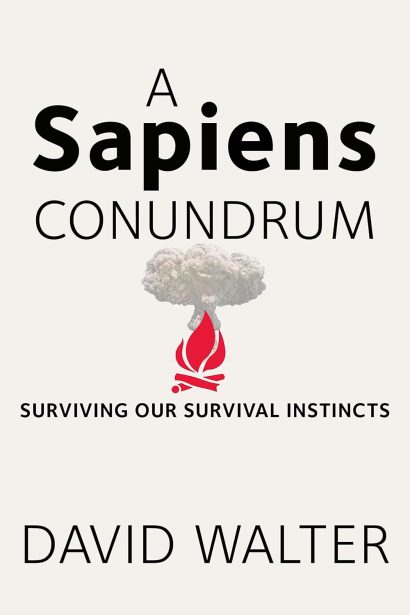
A Sapien’s Conundrum
Pollution, famine, pandemics, extreme weather, social unrest, and inequality stem from humanity’s collective choices. Drawing on research on the Anthropocene, David Walter explains how our drive to survive—paired with our unique capacities—made us a threat to our own future. Blending science and cultural history, he traces Homo sapiens from tribal origins and stone tools to the atomic age and internal combustion, then offers a rational path toward a sustainable future—and the role each of us can play.
Thorough, well-written, and a bit scary.
—Wanda Isle on Amazon -
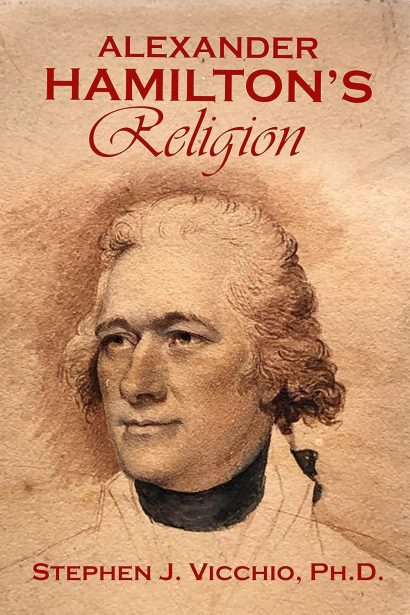
Alexander Hamilton’s Religion
This study examines Alexander Hamilton’s religious life and thought. After a brief biography of his early faith, it explores Hamilton’s Christianity, views of the Bible, and perspectives on Judaism, Catholicism, and Islam. It also addresses ethics, religious freedom, prayer, slavery, and nationalism. The book argues Hamilton was deeply religious early and late in life—less so in between.
-
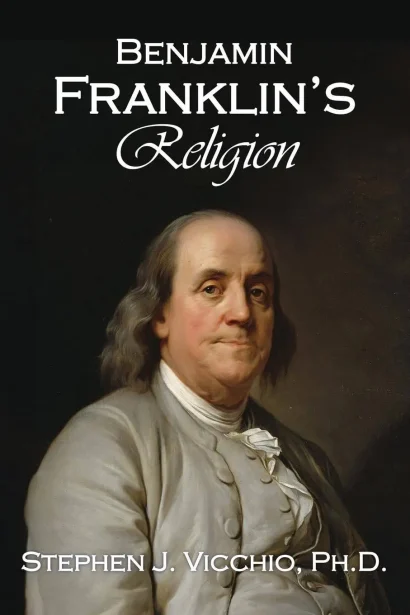
Benjamin Franklin’s Religion
This book explores the religious views of Benjamin Franklin. It traces his early adoption of his parents’ Congregationalist and Presbyterian influences, a long period of doubt, and his reflections on religion while serving as a diplomat in Britain and France—followed by a late-life return to his parents’ monotheism. It examines the intellectual roots of his beliefs, including the Enlightenment, Deism, and the philosophers and theologians he read despite having only two years of formal schooling.
-

Brando on Elvis
In 2018, Letters from Elvis revealed Elvis Presley’s correspondence with confidante Carmen Montez, but legal limits prevented full reprints of related letters. Brando on Elvis: In His Own Words lifts those restrictions, presenting the complete, authenticated Marlon Brando letters about Elvis—an intimate account of friendship, trauma, and rupture, with surprising new insight into Elvis’s private life.
This book shows a tremendous amount of heart and courage
—Violet Light -

Care Under Fire
For many veterans, Vietnam remains indelible—thanks in part to frontline combat medics like Bill “Doc” Strusinski. In Care Under Fire, Strusinski places readers in the terror of firefights, the exhaustion of relentless patrols, and the anguish of losing friends despite desperate efforts to save them. Medics were targeted and forced to treat the wounded under fire. More than a war memoir, this is the story of a man transformed by the sacred duty of caring for others in combat.
an account not told by the scholars and politicians
—Lawrence Redmond -

Cold War Cadence
Cold War Cadence: A Military Musician’s Berlin Memoir, 1988–1991 follows Army bandsman Bruce Gleason through the final years of a divided city haunted by Prussian and Nazi echoes. Drawing on meticulous notes, letters, articles, and photos, he captures the daily work of military musicians and the texture of Berlin on the cusp of change. The result is vivid Cold War history, enriched by an entertaining European and Asian travelogue.
a fascinating read for anyone interested in military, cultural, and world history
—Raoul Camus, author of Military Music of the American Revolution -

Counterfeit Poles
In Counterfeit Poles: A Story of Survival Under Nazi Occupation, Nathan Drew recounts how he and his wife Helen stayed alive in occupied Poland by posing as Christians, moving through Warsaw with forged identities while working with the underground and living one mistake away from death. The memoir begins with the destruction of Jewish life in Łomża and follows Nathan through terror, escape, false papers, betrayal, hunger, and the daily calculations required to survive in Nazi-controlled Europe. The book also preserves his determination to name the dead and remember them not as statistics, but as people.
-
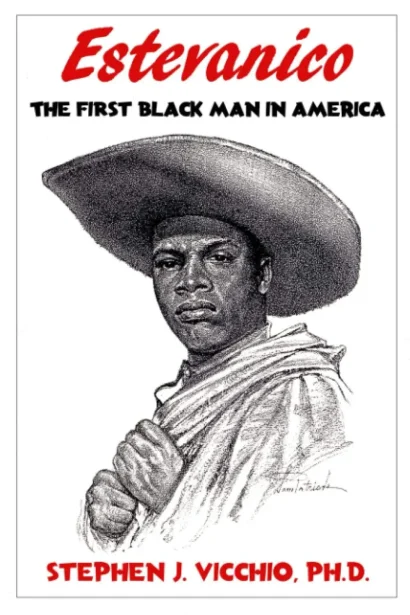
Estevanico
This book tells the story of Estevanico (“Little Stephen”), enslaved scout and ambassador of Spain’s Narváez expedition. Likely born Musthapha Zammouri (1499–1539), he became the first known person of African descent to reach the present-day continental United States. One of only four survivors, he traveled with Cabeza de Vaca across northern New Spain—today’s US Southwest and northern Mexico—reporting on pueblos and towns.
-

From Primates to Politicians
From Primates to Politicians traces politics to its atavistic roots in human evolution, explaining how survival instincts, status competition, and resource struggle shape modern behavior. Juan Manuel Muñoz examines politics as a marketplace dominated by economic elites and political marketing—an arena of distortion we’ve learned to tolerate. In three parts, he surveys primatology, evolution, and power relations; unpacks the evolution of societies and the foundations of conservatism and liberalism; and presents an “evolutionary theory of politics,” applying it to current events and global forecasts.
takes you into… the interaction of the natural sciences with the political science
–Maria Lim, review on Amazon -
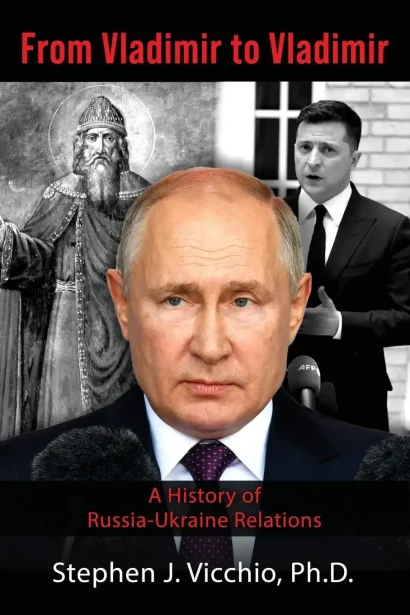
From Vladimir to Vladimir
From Vladimir to Vladimir traces Russia and Ukraine’s tangled bond from Prince Vladimir of Kiev and the Kievan Rus’ (879–1240) to Russia’s February 2022 invasion. Vicchio highlights overlooked links and Ukraine’s repeated subjugations—Mongols, Polish-Lithuanian Commonwealth, and Russian annexation in 1792—then follows nations through wars, Soviet era, and post-1991 independence.
-

Ghosts of the US-Dakota War 1862
Join ghost hunter and historian Adrian Lee, along with his elite team of paranormal investigators, on a compelling tour of the most haunted historic places of the US-Dakota War. His chilling firsthand investigations, accompanied by rich historical details, will send shivers down your spine as he recovers history from the lips of the dead.
worth multiple reads… a spectacularly detailed and poignant account of this sad series of events
—Amazon reader -
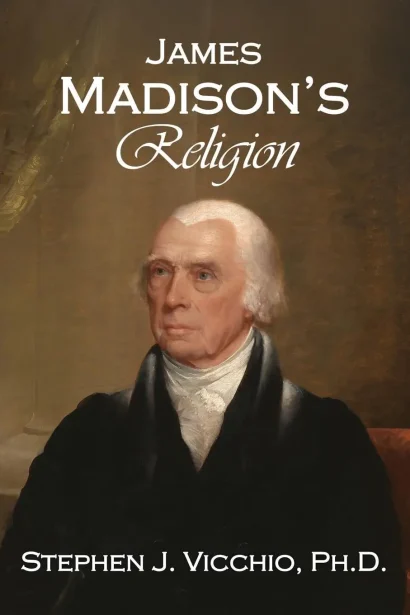
James Madison’s Religion
James Madison’s Religion reveals how Madison’s private convictions shaped America’s public liberty. Drawing on letters, debates, and overlooked manuscripts, it traces his journey from Anglican Virginia and Presbyterian schooling through Enlightenment influence to the Constitutional Convention, showing how his conscience-first philosophy became the blueprint for the First Amendment. Madison saw pluralism as strength and state control of religion as a path to oppression. Blending biography, intellectual history, and political analysis, the book explores his debates with Jefferson and Hamilton, why the amendment’s wording mattered, and how his “theology of liberty” still informs today’s fights over belief, speech, and the public square.
-

Josef Myslivecek, il Boemo
Josef Mysliveček (1737–1781)—Italy’s “Il Boemo”—is one of eighteenth-century Europe’s most enigmatic composers. Born in Prague to a wealthy milling family, he began serious composition study only as an adult yet rose rapidly to prominence. Friend to Leopold and Wolfgang Mozart, Mysliveček appears in their correspondence as a charismatic figure “full of fire, spirit, and life,” shadowed by scandal. This study assembles the documentary record of his life and offers a detailed account of his compositional style, revealing his underestimated influence on the young Mozart.
one of the best composers of opera in the second half of the 18th century
—Dr. Mike J. Storek on Amazon -

Letters from Elvis
Letters from Elvis may be the most important and revealing book ever written about ‘The King.’ It is based on material contained in hundreds of handwritten and authenticated letters that Elvis and his friends—Marlon Brando, Harry Belafonte and Tom Jones—secretly wrote to their spiritual guide, Carmen Montez. Never has such an intimately revealing collection of letters surfaced about such a well-known celebrity.
The performer was adored, now it is the man who is being reclaimed.
—Marilène Phipps, author Unseen Worlds -

Letters to the Chief
In this enchanting memoir, Judi Lifton revisits luminous childhood years in a small Minnesota town, when days meant books, bikes, and neighborhood discovery. Her memories unfold as heartfelt letters from her fourteen-year-old self to a beloved, terminally ill friend—Chief White Feather, an American Indian storyteller and rights advocate. Never written then, these “letters of the heart” arrive now in sepia-toned prose, rich with family affection, 1950s nostalgia, and the ache of loneliness and loss.
a beautiful melding of memory and imagination by a talented writer.
—Patricia Averbach, author of Painting Bridges and Resurrecting Rain -

Lost Boys of Hannibal
In 1967 Hannibal, Missouri—Mark Twain’s boyhood home—became the site of the largest cave search in U.S. history. Three modern-day Tom Sawyers—Joel Hoag, his brother Billy, and friend Craig Dowell—entered a newly exposed maze cave with bravado and no expertise, then vanished. The calamity scarred the town for decades. Fifty years later, their fate remains an unsolved mystery.
takes a caver’s bright headlamp to the boys’ story
—Jo Schaper, Speleohistorian