
Showing 17–32 of 33 results
-

Making It
Ride shotgun in Ted Myers’s rollercoaster pursuit of rock stardom through the ’60s, ’70s, and ’80s. He never quite makes it, but the quest delivers wild highs, hard lessons, and unforgettable encounters with cultural icons—Bob Dylan, Joni Mitchell, The Who, James Taylor, Graham Nash, Van Morrison, Steely Dan, Timothy Leary, Chevy Chase, and even Elvira.
It is such a delight…
—Graham Nash -

Minnesota’s Phoenix
Minnesota’s Phoenix is the first comprehensive history of Sun Country Airlines—the hometown carrier built from the wreckage of a fallen giant. Drawn from exclusive interviews, original news coverage, and artifacts preserved by Sun Country employees themselves, this is a vivid, behind-the-scenes account of how an unlikely startup fought its way into the skies.
-
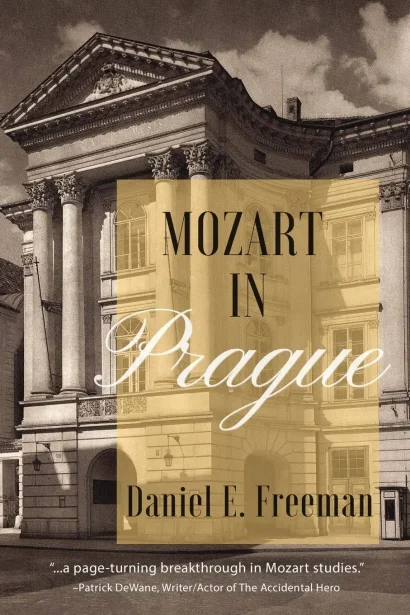
Mozart in Prague
Mozart in Prague explores the city that embraced Mozart as Vienna often did not. In musically literate Prague, he found true recognition—celebrated like a rock star at the 1787 premiere of the “Prague” Symphony. After his 1791 death, Prague honored him with a massive funeral that halted civic life, and its citizens helped support his penniless widow and children. Blending cultural history and vivid characters—including Marie Antoinette and Giacomo Casanova—the book reveals Mozart’s unique bond with this beautiful, cultured city.
a page-turning breakthrough in Mozart studies
—Patrick DeWane, Writer/Actor of The Accidental Hero -
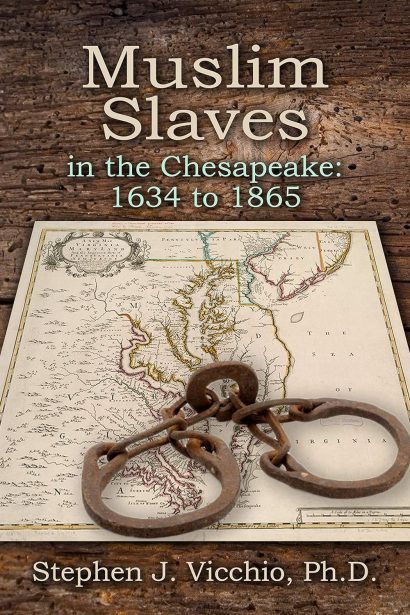
Muslim Slaves In The Chesapeake 1634 to 1865
Based on a decade of research, this book investigates Muslim slaves in the Chesapeake Bay region from 1634 to 1865. It documents fifty-five Muslim slaves in Maryland and fifty-one in Virginia, and explores the broader system that shaped their lives—African slave forts and prisons, the Middle Passage, and the auction and dealer networks in Maryland, Virginia, and Washington, DC
-

My Father Against the Nazis
My Father Against the Nazis traces Steven Mayer’s decades-long effort to understand his father, Paul—a German Jewish refugee whose trauma surfaced when Steven wore his coat in a 1959 production of The Diary of Anne Frank. Drawing on family memories, hidden documents, and Paul’s words, the book follows his childhood in Köln, escape from fascism, service with the U.S. Army’s Ritchie Boys, and postwar pursuit of justice. Blending memoir, history, reflection, and an innovative Dos Passos–inspired structure, it asks what it means to resist tyranny across generations.
a tremendous piece of creativity and craftmanship
—Peter Faber, Film and Stage Actor -

My Father’s House
In 1910, twenty-year-old Karl Artur Johan Gustafsson leaves Sweden for America, becoming Carl Arthur Gustafson at Ellis Island. Settling in Forestville/Bristol, Connecticut, he marries Jennie Anderson and builds a family. Told by their third child, this multigenerational story follows them through WWI, the Great Depression, WWII, shifting technologies and roles, and the upheavals of the 1960s and 70s.
The potent story of the Gustafsons is also the story of America
—KIRKUS REVIEWS -

Off the Record
Off the Record is an unauthorized, real-time journal of an Army nurse’s year-long tour in Vietnam, written within hours—sometimes minutes—of the events it records. A budding photographer, she includes private images that deepen the immediacy. The diary reveals how combat conditions, weather, cultural divides, and isolation shaped morale and performance, while lives—soldiers, civilians, POWs, and children—were altered or lost. Moving and unflinching, it transports readers to 1967 and the realities of trauma care.
Truly a Pepysian effort!
—Colonel Nickey McCasland, Ret, US Army Nurse Corps -

Revolution
Revolution is a lively, provocative exploration of how social power actually works—across dilemmas ranging from astrophysics to the ethics of financial mischief. It traces the tangled forces that shape political and economic dominance, distort reality, commodify information, and manipulate emotion. Redefining revolution as a complex outcome rather than a fiery speech, the book argues that scientific thinking and critical analysis are essential tools for any change that truly succeeds.
not only a prediction but also a compass
—Tere Arenas, review on Amazon -

Roots of Elvis
Much of what you’ve been told about Elvis’s early years is wrong. The Roots of Elvis argues his true origin was concealed by family and handlers—and reclaims it through new research. It explores how ancestry shaped Elvis, correcting myths and uncovering surprises: Cherokee and Jewish links, an unmarried Presley matriarch with nine children, an unknown great-grandfather, Gladys’s middle-name mystery, a hidden birthplace, and a possible genetic mutation.
tells the true story of one of the greatest icons in the music world
—Pete Carlson, author of Ukrainian Nights -
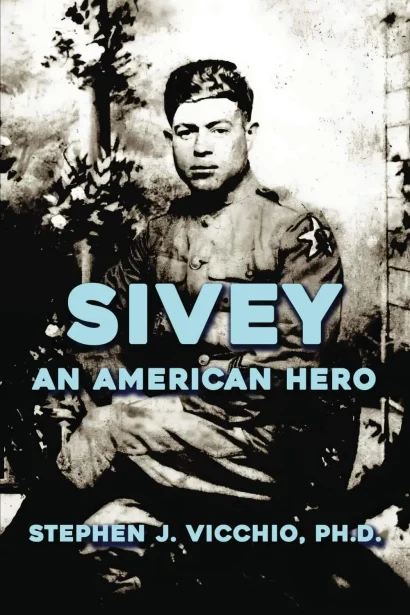
Sivey
Sivey: An American Hero tells the true story of Salvator “Sivey” Vicchio, a decorated World War I veteran and professional boxer. After surviving Europe’s trenches and earning the Silver Star and two Purple Hearts, he returns home to battle trauma and rebuild his life in the ring. A vivid biography of courage, sacrifice, resilience, and a forgotten warrior’s legacy.
-

Souls Speak
This updated second edition of Souls Speak revisits the 1967 disappearance of three boys in Hannibal, Missouri—case that sparked the largest cave search in U.S. history, yet found no trace. A later investigation draws in three psychics who independently point to serial killer John Wayne Gacy as an early suspect. The mystery culminates in a newly discovered deathbed confession that expands Gacy’s known victims—and finally reveals what happened to Hannibal’s missing boys.
a likely resolve to an unsolved mystery
—Mike Daak -

Sowing Seeds
How did Minnesota—far from either coast—become a literary mecca? Sowing Seeds traces the Twin Cities renaissance of the 1960s and 70s, explaining why institutions like the Loft Literary Center, Minnesota Center for Book Arts, and Milkweed Editions emerged here, and why Graywolf and Coffee House Press chose to relocate. At the center is poet Robert Bly, whose generosity and vision ignited statewide excitement and built a supportive community, sparking reading series, magazines, small presses, and lasting literary infrastructure.
A handbook for generations of readers and writers who believe that many voices are better than a few.
—Marly Rusoff, founder of The Loft Literary Center -

Standing at the Grave
Weeks before Queen Victoria’s birth, Anna Christina Schmidt is born to a German settler on a Polish noble’s estate. Unlike the Queen, her life is marked only by a moss-covered tombstone and a hollow in the grass. Standing at the Grave tells the true story of a forgotten mother who watched her children leave for America, never expecting their return—and follows their journey from Poland’s Wielkopolska plains to North Dakota’s prairies.
Striking settings, apt descriptions and lively dialogue reveal this family
—Barbara Pieh, Past President, Germanic Genealogical Society -

The Grain Terminal Elevators of Duluth-Superior
The Grain Terminal Elevators of Duluth-Superior tells the story of risk and innovation that built one of the world’s great grain ports. Through merchants, architects, and empire builders, it traces the elevators’ evolution from simple wooden structures to concrete architectural marvels. Follow Duluth-Superior’s rise as the Great Lakes export leader and its peak in the St. Lawrence Seaway era.
very insightful and informative with outstanding illustrations
—Leigh, review on Amazon -

The Indomitable Elizabeth Fries Ellet – Feminist
Elizabeth Fries Ellet defied “separate spheres,” rejecting a world where men set the rules and women lived within them. Imagine her today, trading quills for keyboards and carriages for planes, producing even more work. Her era’s tools may be gone, but her message endures: women deserve equality—and still fight for it.
-

The Inheritance (Yurusha)
As a boy, Elliot Rosen watched his grandfather write and sketch in secret Yiddish journals—then the book vanished after his death. Decades later, it resurfaces through family hands, shadowed by silence and sudden loss. Now married, Elliot takes responsibility to translate it, revealing Yisroel Ayzik Rosen’s remarkable immigrant survival story: tearful, funny, uplifting, and ultimately spiritual.
a story of struggle, hope and faith
—Sheila Klige review on Amazon