
Showing 1–16 of 28 results
-
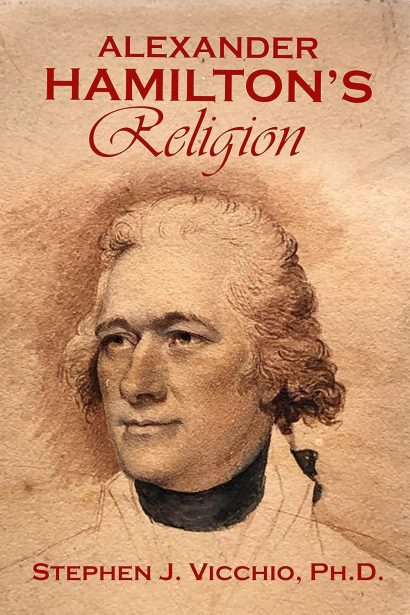
Alexander Hamilton’s Religion
This study examines Alexander Hamilton’s religious life and thought. After a brief biography of his early faith, it explores Hamilton’s Christianity, views of the Bible, and perspectives on Judaism, Catholicism, and Islam. It also addresses ethics, religious freedom, prayer, slavery, and nationalism. The book argues Hamilton was deeply religious early and late in life—less so in between.
-
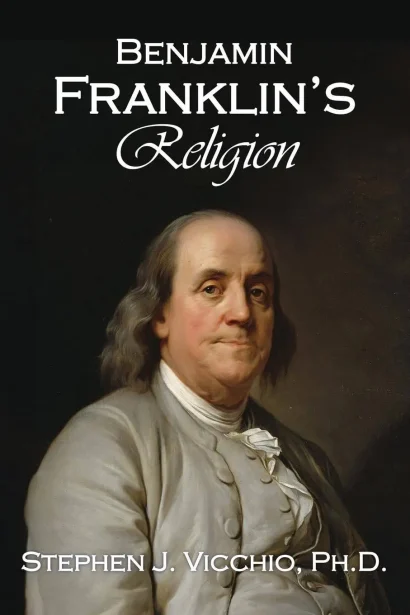
Benjamin Franklin’s Religion
This book explores the religious views of Benjamin Franklin. It traces his early adoption of his parents’ Congregationalist and Presbyterian influences, a long period of doubt, and his reflections on religion while serving as a diplomat in Britain and France—followed by a late-life return to his parents’ monotheism. It examines the intellectual roots of his beliefs, including the Enlightenment, Deism, and the philosophers and theologians he read despite having only two years of formal schooling.
-

Dance of Light
Dance of Light portrays the spiritual life as a captivating dance—sometimes effortless, sometimes disorienting. In a clear, compelling voice, McDowell guides readers through stages of realization, from bewilderment and detachment to renewal, awakening, illumination, the dark night of the soul, and ultimately divine union or self-realization. Each chapter explains a “step” and closes with open-ended reflective questions, blending ancient wisdom, contemporary teachers, and personal experience for seekers at any level.
a gem worth exploring
—Rev. Anita Cummings on Amazon -

Evil and Suffering in the Bible
If God is all-good, all-knowing, and all-powerful, why do evil and suffering persist? In Evil and Suffering in the Bible, Stephen Vicchio examines how the Old and New Testaments portray these realities and how biblical thinking about them evolves across scripture. He also offers historical context, summarizing eight major responses within the biblical tradition to the problem of evil. This work brings rigorous scholarship to questions we urgently want answered.
-
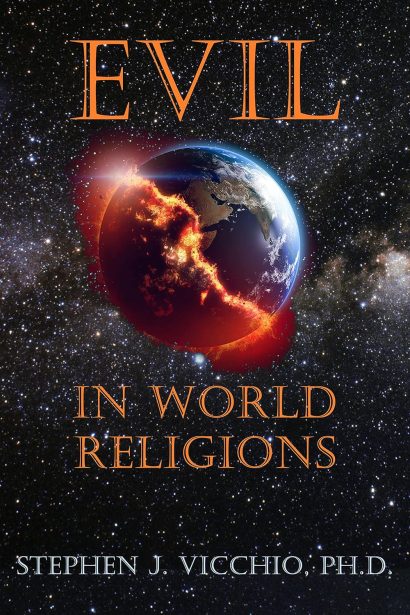
Evil in World Religions
Evil in World Religions compares how major faith traditions explain evil and suffering. After defining key terms such as “religion” and “evil,” it surveys ancient traditions including Hinduism, Judaism, and dualistic faiths like Zoroastrianism, Mithraism, and Manichaeism. It then examines Buddhism, Confucianism, Taoism, and Shinto, followed by Christianity and Islam, and concludes with traditional African religions, especially Yoruba and Igbo. An essential resource for students of comparative religion and theodicy.
-
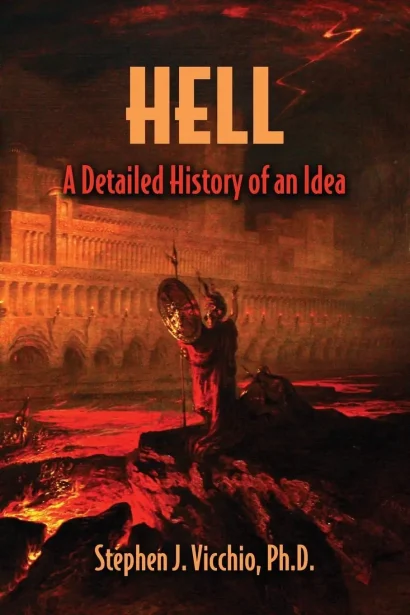
Hell
This book traces the history of an idea: hell and punishment after death. It surveys ancient and medieval perspectives, then examines how Judaism, Christianity, and Islam understand hell in the modern era. Appendices explore key foreign terms, concepts such as levels of hell, and artistic portrayals of the afterlife across the centuries.
-
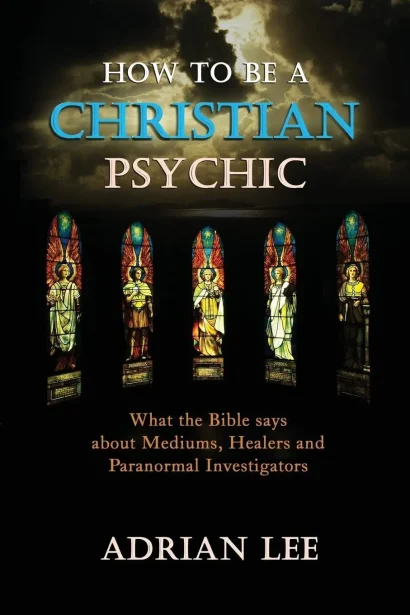
How to Be a Christian Psychic
Historian and psychic investigator Adrian Lee digs into religious beliefs that appear on the surface to denounce the work of mediums, healers, and psychics. He explains these passages clearly and in historical context, challenging Christians to understand the deeper meanings and various settings in which these passages were intended to apply, so that the Bible’s true message can emerge.
every Christian needs to read this book
—Reader on Amazon UK -

Humanity Coming of Age
Humanity Coming of Age offers a systemic, nonpolitical blueprint for peace and global harmony drawn from the world’s great wisdom traditions. The authors argue this timeless plan has emerged gradually as human understanding has matured—and that the moment has arrived to apply its rational principles to transcend division and build a more just world. The book contends humanity’s “coming of age” has already begun.
-
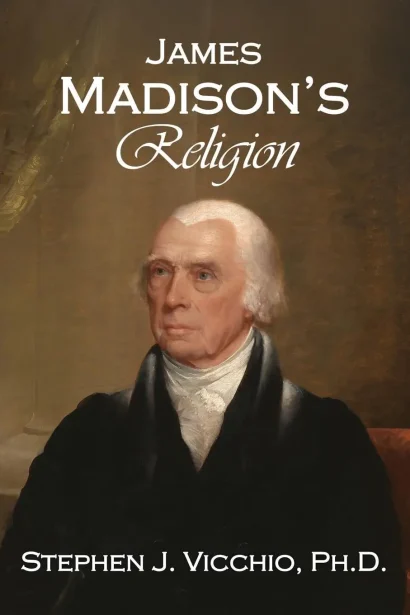
James Madison’s Religion
James Madison’s Religion reveals how Madison’s private convictions shaped America’s public liberty. Drawing on letters, debates, and overlooked manuscripts, it traces his journey from Anglican Virginia and Presbyterian schooling through Enlightenment influence to the Constitutional Convention, showing how his conscience-first philosophy became the blueprint for the First Amendment. Madison saw pluralism as strength and state control of religion as a path to oppression. Blending biography, intellectual history, and political analysis, the book explores his debates with Jefferson and Hamilton, why the amendment’s wording mattered, and how his “theology of liberty” still informs today’s fights over belief, speech, and the public square.
-
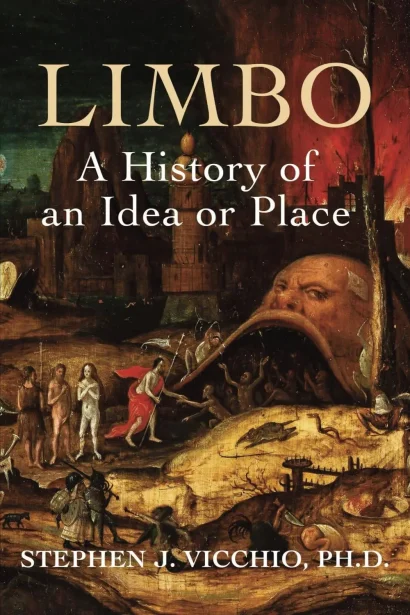
Limbo
Limbo: The History of an Idea or Place traces humanity’s fascination with a realm between Heaven and Hell. Stephen J. Vicchio examines how ancient Greece, Judaism, Christianity, Islam, and Eastern traditions imagined Limbo, drawing on key texts, art, and music. From virtuous pagans to unbaptized infants, Limbo reveals evolving beliefs about sin, redemption, and the unknown—and its lasting impact on doctrine and culture.
-
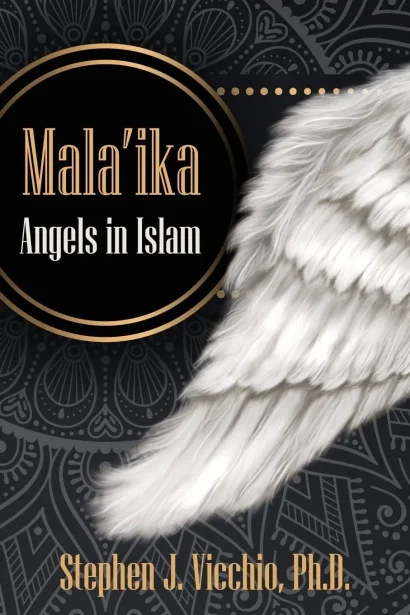
Mala’ika – Angels in Islam
This book explores Islamic beliefs about the Mala’ika (angels), their nature, roles, and why faith in angels is one of Islam’s six core Articles of Faith. It focuses on Jibril (Gabriel), bearer of the Qur’an’s revelation to Prophet Muhammad, and surveys other archangels and their relationship to Allah. It also examines angels in early Islamic battles, their presence in Muslim art, and the jinn’s interactions with humanity.
explored the text within the Quran, the Bible, the Torah as well as different scholar’s interpretation or ideas on each
—K. G. A. Alavi, verified review on Amazon -
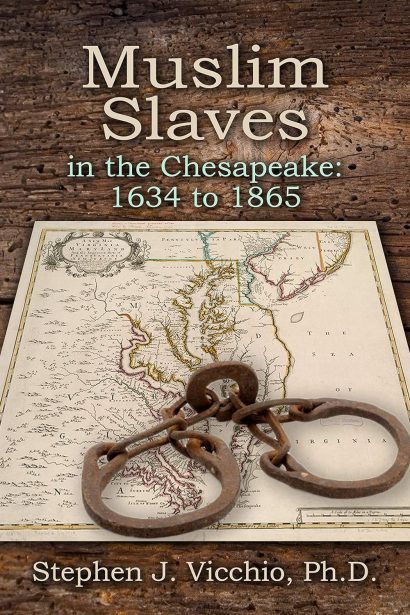
Muslim Slaves In The Chesapeake 1634 to 1865
Based on a decade of research, this book investigates Muslim slaves in the Chesapeake Bay region from 1634 to 1865. It documents fifty-five Muslim slaves in Maryland and fifty-one in Virginia, and explores the broader system that shaped their lives—African slave forts and prisons, the Middle Passage, and the auction and dealer networks in Maryland, Virginia, and Washington, DC
-
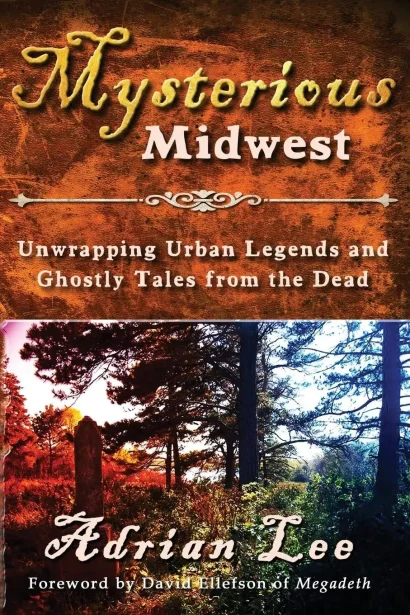
Mysterious Midwest
Are you ready to experience the resident spirits of Forepaugh’s Restaurant in St. Paul, the witch’s curse of Loon Lake Cemetery, the phantom of Wieting Opera House, the restless souls of a Masonic temple, and the ghosts of grisly murder victims? Adrian Lee’s chilling firsthand investigations, accompanied by rich historical details, will send shivers down your spine as he recovers history from the lips of the dead.
A great personal and book club read
—Aleestein on Amazon -
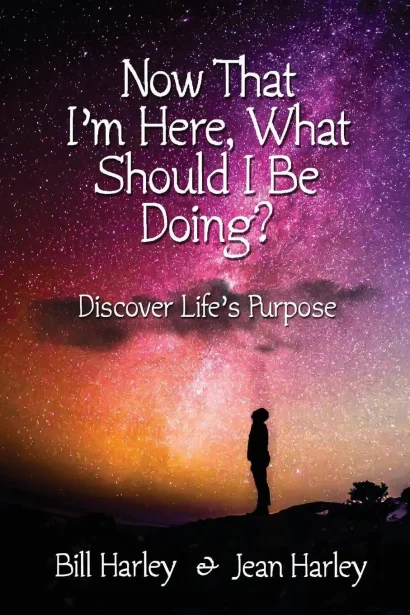
Now That I’m Here, What Should I Be Doing?
We’re in a decision-making crisis: life’s growing complexity is outpacing our ability to choose well. In response, a life coach/consultant and a psychotherapist present a transformative process that engages the whole person—spiritually, intellectually, socially, and emotionally. Designed for individuals, families, organizations, and communities, it strengthens relationships, surfaces latent capacities, integrates diverse viewpoints, deepens understanding, and produces creative, resilient decisions that rise above partisan bickering—aiming ultimately at greater justice and unity.
Powerful, with multiple layers of meaning…
—Carol J. Dahlen on Amazon -

Peace for Our Planet
This book argues that history is shaped by two parallel forces: a constructive process building collective consciousness, and a destructive process clinging to divisive power. It traces how racism, nationalism, religious strife, gender inequality, and extreme wealth and poverty are increasingly delegitimized—prompting a frantic last stand by those who benefit. Amid collapsing institutions, it highlights the forward march toward peace and the practical role each person can play in advancing it.
the best I have read on the current condition of our world and the path forward toward peace
—Beal, E, PhD, verified review on Amazon -

Seeing God in Many Mirrors
Seeing God in Many Mirrors explores the unity beneath the world’s religions, arguing that different traditions are “mirrors” reflecting the same divine light. With clear, engaging insight, Gary Lindberg shows how many paths can reveal one truth, offering spiritual clarity amid complexity. For seekers and believers alike, the book renews the quest for deeper connection and celebrates faith as a shared journey.
an untangling of a mystery about the common origins of all the religions we know today
—BEC on Amazon