
Showing 1–16 of 29 results
-
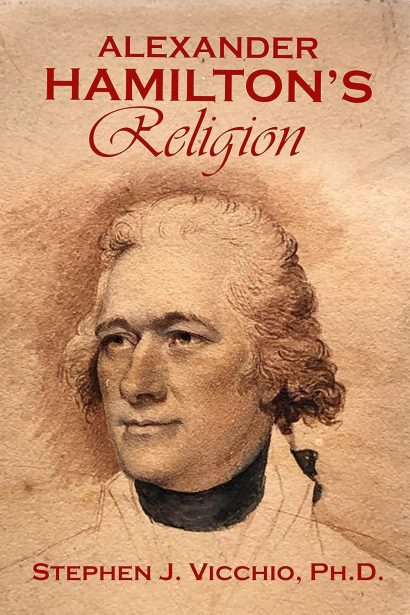
Alexander Hamilton’s Religion
This study examines Alexander Hamilton’s religious life and thought. After a brief biography of his early faith, it explores Hamilton’s Christianity, views of the Bible, and perspectives on Judaism, Catholicism, and Islam. It also addresses ethics, religious freedom, prayer, slavery, and nationalism. The book argues Hamilton was deeply religious early and late in life—less so in between.
-

An African Son
Born a tribal boy in Liberia, Abraham Watson endured prejudice yet built a secure life as a teacher and Voice of America technician. In 1990, civil war shattered everything, forcing him to outsmart rebel checkpoints to save his family. Through exile and racism in Africa and the U.S., Abe remains a resilient, generous leader—proof of the potential in us all.
I read it cover-to-cover, almost without stopping
—Richard J. Borken, PhD, review on Amazon -

An Improbable Series of Risky Events
After dying on the operating table, Gary Lindberg wakes with most of his memories erased. Determined to recover them, he reconstructs a life defined by risk and an intolerance for boredom—spanning Hollywood, magic and music, wartime horrors, monster hunts, heists, cartel encounters, murders, mysteries, and even space exploration. These memoirs emerge from years of recollection and interviews with family and friends.
-
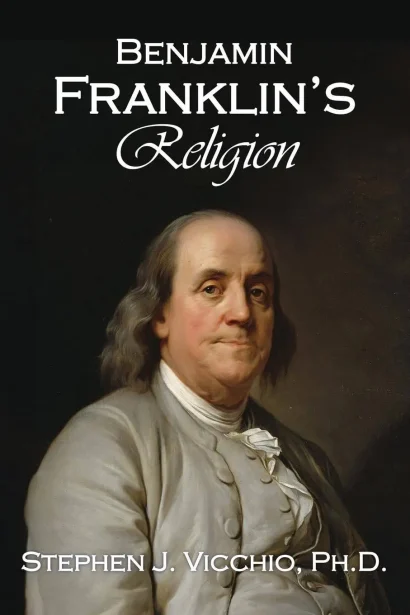
Benjamin Franklin’s Religion
This book explores the religious views of Benjamin Franklin. It traces his early adoption of his parents’ Congregationalist and Presbyterian influences, a long period of doubt, and his reflections on religion while serving as a diplomat in Britain and France—followed by a late-life return to his parents’ monotheism. It examines the intellectual roots of his beliefs, including the Enlightenment, Deism, and the philosophers and theologians he read despite having only two years of formal schooling.
-

Counterfeit Poles
In Counterfeit Poles: A Story of Survival Under Nazi Occupation, Nathan Drew recounts how he and his wife Helen stayed alive in occupied Poland by posing as Christians, moving through Warsaw with forged identities while working with the underground and living one mistake away from death. The memoir begins with the destruction of Jewish life in Łomża and follows Nathan through terror, escape, false papers, betrayal, hunger, and the daily calculations required to survive in Nazi-controlled Europe. The book also preserves his determination to name the dead and remember them not as statistics, but as people.
-
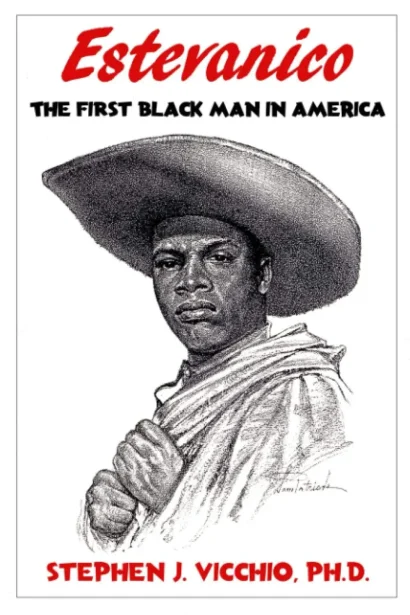
Estevanico
This book tells the story of Estevanico (“Little Stephen”), enslaved scout and ambassador of Spain’s Narváez expedition. Likely born Musthapha Zammouri (1499–1539), he became the first known person of African descent to reach the present-day continental United States. One of only four survivors, he traveled with Cabeza de Vaca across northern New Spain—today’s US Southwest and northern Mexico—reporting on pueblos and towns.
-

Hannah and Martin
Hannah & Martin is a dramatized play about the fraught philosophical and romantic entanglement between Hannah Arendt and Martin Heidegger. Set against questions of being, truth, and ethics, it confronts the tension between Arendt’s Jewish identity and Heidegger’s Nazi affiliation. Stephen Vicchio uses their relationship to probe the moral stakes of ideas. Complementing the drama are essays exploring human suffering, love in classical and Christian traditions, and the ethical implications of philosophical thought—inviting readers to consider how personal history shapes morality and existence.
-
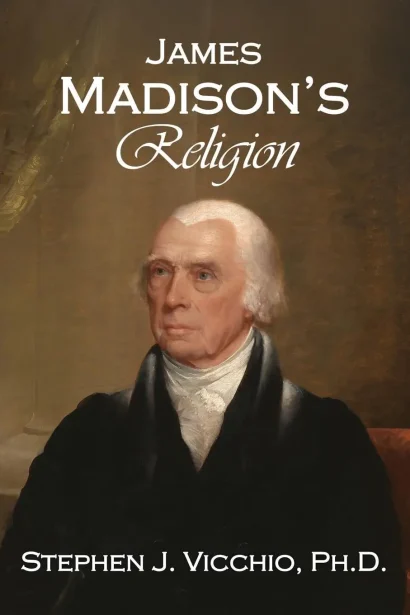
James Madison’s Religion
James Madison’s Religion reveals how Madison’s private convictions shaped America’s public liberty. Drawing on letters, debates, and overlooked manuscripts, it traces his journey from Anglican Virginia and Presbyterian schooling through Enlightenment influence to the Constitutional Convention, showing how his conscience-first philosophy became the blueprint for the First Amendment. Madison saw pluralism as strength and state control of religion as a path to oppression. Blending biography, intellectual history, and political analysis, the book explores his debates with Jefferson and Hamilton, why the amendment’s wording mattered, and how his “theology of liberty” still informs today’s fights over belief, speech, and the public square.
-

Josef Myslivecek, il Boemo
Josef Mysliveček (1737–1781)—Italy’s “Il Boemo”—is one of eighteenth-century Europe’s most enigmatic composers. Born in Prague to a wealthy milling family, he began serious composition study only as an adult yet rose rapidly to prominence. Friend to Leopold and Wolfgang Mozart, Mysliveček appears in their correspondence as a charismatic figure “full of fire, spirit, and life,” shadowed by scandal. This study assembles the documentary record of his life and offers a detailed account of his compositional style, revealing his underestimated influence on the young Mozart.
one of the best composers of opera in the second half of the 18th century
—Dr. Mike J. Storek on Amazon -

Kayaking the Great Circle Trilogy
Some people chase windmills; Randy Bauer circumnavigates the United States by kayak. The Trilogy began as a dream, then became a risk-filled reality—one that challenges our ideas of comfort and courage. Told by his brother, James J. Bauer, this adventure follows Randy through joys, trials, and unforgettable people met along the way. It’s a testament to resilience, tenacity, and the quiet inner voice urging us toward the adventure we dare to take.
This journey put Randy Bauer in the Guinness Book of World Records
—Joe Meiman, verified review on Amazon -

Letters from Elvis
Letters from Elvis may be the most important and revealing book ever written about ‘The King.’ It is based on material contained in hundreds of handwritten and authenticated letters that Elvis and his friends—Marlon Brando, Harry Belafonte and Tom Jones—secretly wrote to their spiritual guide, Carmen Montez. Never has such an intimately revealing collection of letters surfaced about such a well-known celebrity.
The performer was adored, now it is the man who is being reclaimed.
—Marilène Phipps, author Unseen Worlds -

Maude
Maude is a warm, vivid memoir of friendship, memory, and the hidden lives that shape us. Set against the cultural upheaval of Dinkytown and the University of Minnesota in the late 1960s and after, Helen Electrie Lindsay brings to life a vanished world of boardinghouses, antiwar protests, students, immigrants, old money in decline, and the intimate rituals of coffee, conversation, recipes, and trust.
-

Minnesota’s Phoenix
Minnesota’s Phoenix is the first comprehensive history of Sun Country Airlines—the hometown carrier built from the wreckage of a fallen giant. Drawn from exclusive interviews, original news coverage, and artifacts preserved by Sun Country employees themselves, this is a vivid, behind-the-scenes account of how an unlikely startup fought its way into the skies.
-
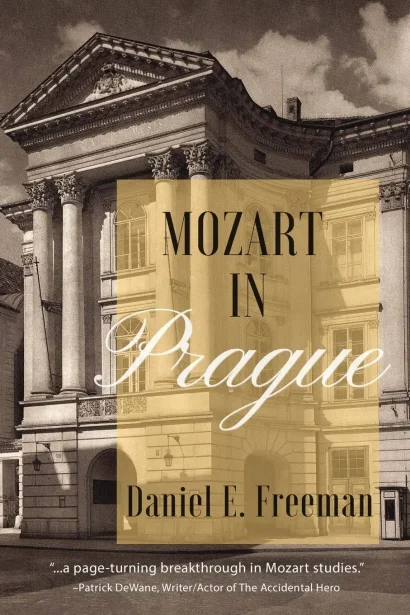
Mozart in Prague
Mozart in Prague explores the city that embraced Mozart as Vienna often did not. In musically literate Prague, he found true recognition—celebrated like a rock star at the 1787 premiere of the “Prague” Symphony. After his 1791 death, Prague honored him with a massive funeral that halted civic life, and its citizens helped support his penniless widow and children. Blending cultural history and vivid characters—including Marie Antoinette and Giacomo Casanova—the book reveals Mozart’s unique bond with this beautiful, cultured city.
a page-turning breakthrough in Mozart studies
—Patrick DeWane, Writer/Actor of The Accidental Hero -

My Father Against the Nazis
My Father Against the Nazis traces Steven Mayer’s decades-long effort to understand his father, Paul—a German Jewish refugee whose trauma surfaced when Steven wore his coat in a 1959 production of The Diary of Anne Frank. Drawing on family memories, hidden documents, and Paul’s words, the book follows his childhood in Köln, escape from fascism, service with the U.S. Army’s Ritchie Boys, and postwar pursuit of justice. Blending memoir, history, reflection, and an innovative Dos Passos–inspired structure, it asks what it means to resist tyranny across generations.
a tremendous piece of creativity and craftmanship
—Peter Faber, Film and Stage Actor -

My Father’s House
In 1910, twenty-year-old Karl Artur Johan Gustafsson leaves Sweden for America, becoming Carl Arthur Gustafson at Ellis Island. Settling in Forestville/Bristol, Connecticut, he marries Jennie Anderson and builds a family. Told by their third child, this multigenerational story follows them through WWI, the Great Depression, WWII, shifting technologies and roles, and the upheavals of the 1960s and 70s.
The potent story of the Gustafsons is also the story of America
—KIRKUS REVIEWS