Calumet Editions

Categories: ,

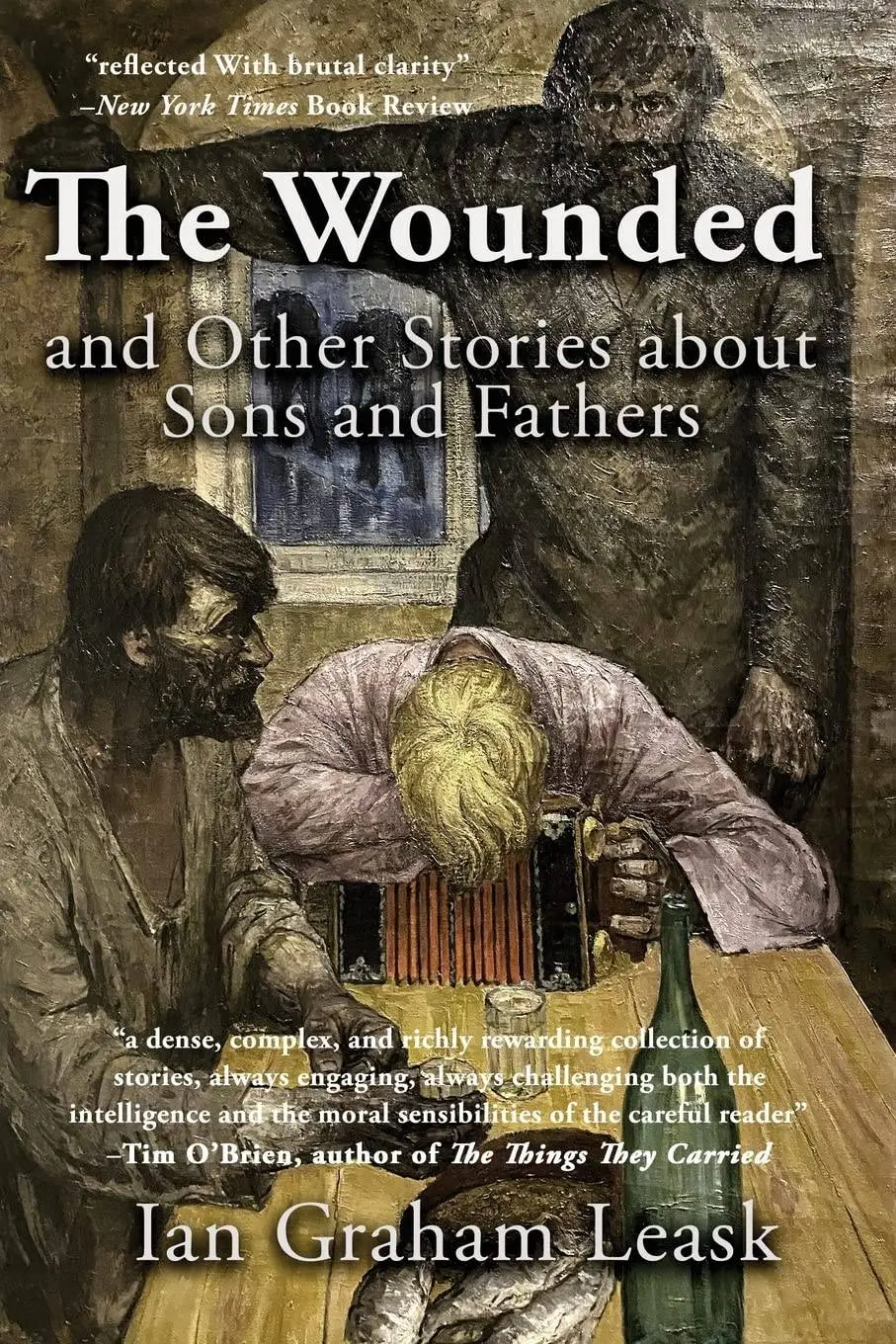
The Wounded and Other Stories about Sons and Fathers

The Wounded and Other Stories About Sons and Fathers channels Robert Bly’s Men’s Movement while standing apart from its orthodoxies. Leask’s linked, autobiographical stories—published by New Rivers Press—echo the spare, formative tradition of Hemingway’s In Our Time and Joyce’s A Portrait of the Artist as a Young Man. This new edition adds two later anthology stories.

Reflected with brutal clarity

New York Times Book Review

Description

The Wounded and Other Stories About Sons and Fathers is a powerful expression of Robert Bly’s Men’s Movement. Although Leask largely stood aside from Bly’s followers, he published these connected short stories with New Rivers Press in the tradition of autobiographical fiction, reminiscent of Hemingway’s In Our Time or Joyce’s A Portrait of the Artist As a Young Man. Two stories published in anthologies after the release of The Wounded, have been “collected” into this new edition.

Product Details

PublishedJanuary 31, 2023
ImprintCalumet Editions
LanguageEnglish
Print length244
ISBN-13978-1959770596
Dimensions6 x 0.61 x 9 inches

A dense, complex, and richly rewarding collection of stories, always engaging, always challenging both the intelligence and the moral sensibilities of the careful reader.

—Tim O’Brien, author of The Things They Carried

With crackling prose and a clear perceptive eye focused on the world, Ian Graham Leask manages to capture damaged families in a way that breaks our hearts, even as he expands our feelings outwards for these characters. To read these stories is to be transported to England, India, and into families that struggle to find their way in a brutal world. I was impressed with his ability to make me feel present, and I envied his perceptive eye. Here is a collection of stories that teach us something about the art of short fiction. I was particularly taken with ‘Bombay Morning,’ Piggybank,’ and ‘Smoking Section.’ Wonderful writing. Crisp, clear, generous in scope and vision.

—Patrick Hicks, In the Shadow of Dora

In ‘Piggybank,’ the defining story of this remarkable collection, a good-natured, well-intentioned young boy is subjected to confusing images of violence during his first day at a holiday resort, where his bankrupt family is soon to live. The boy resists, in his imagination, what Leask perceives as an inevitable plunge toward violet manhood. Like young Calum, other characters in the collection follow this wrong-headed plunge into the confusing world of modern maleness. Leask’s stylings are sometimes brutal, sometimes hilarious, always sensational and disturbing. Leask demonstrates a mastery of a wide variety of techniques and story types. His work is easy to read, but on close analysis reveals itself to be carefully, subtly crafted.

—Susan Welch, Crowning the Queen of Love

In this haunting debut collection, set mostly in 1950s (sic) England, life is a battleground and family offers no protection-only more violence. The title story depicts a downwardly mobile couple attempting to cope with their hard-drinking young son. The boy, Calum, again appears in the two finest stories, adapting to his squalid world without losing his imagination or tenderness: at the age of 10, he already feels “the magic of his life . . . leaking away.” Later, he achieves his teenage triumph fighting a sadistic neighborhood bully. The last, somewhat sentimental story features an older, more contented Calum with a son of his own. This tale of mellowing lacks Leask’s keen perception of violence; though nuanced, the story has none of the captivating bite and urgency of the early Calum stories. Three other compelling tales intertwine events in a young couple’s lives: Hesta’s dreamlike reaction to the death of the Swiss lover who had aroused her sexuality; bookish Rod’s daring behavior on a tough English building crew; and Rod’s reconciliation with the premature death of Hesta’s mother, in whom he felt he had found a mother of his own.

–Publishers Weekly